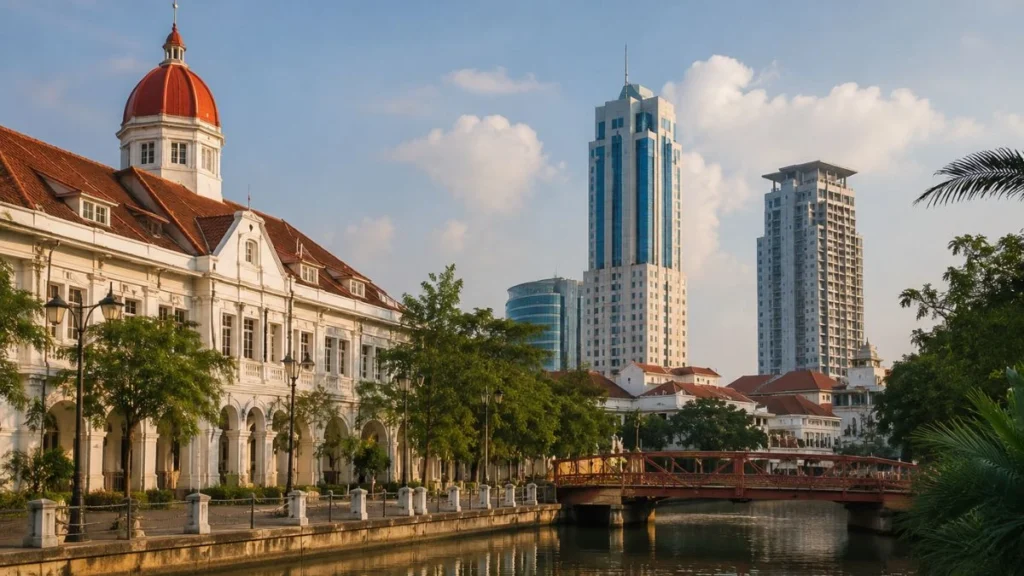
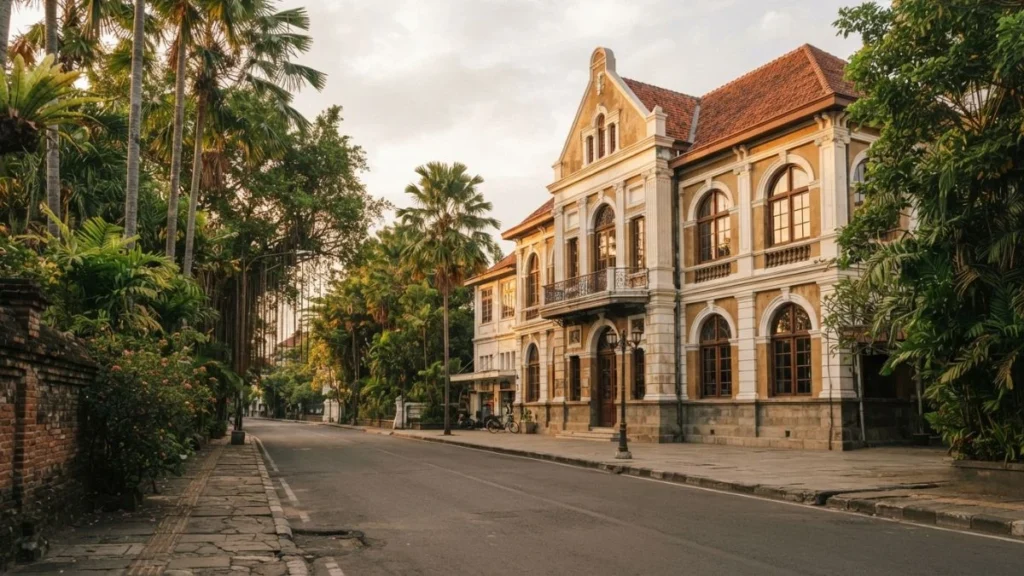
Surabaya earned its nickname “City of Heroes” through a real, still-visible history, and its best attractions reflect that mix — colonial-era architecture, war memorials, a genuinely old zoo, and one of Indonesia’s most striking modern bridges, all within a manageable radius of the city center. Here’s what’s actually worth your limited time.
Tugu Pahlawan (Heroes Monument)
This 135-foot monument honors the freedom fighters who died in the Battle of Surabaya on November 10, 1945, and remains the city’s most iconic historical landmark. Beneath it, the 10 November Museum provides real context on the battle and Indonesia’s independence struggle — worth pairing with the monument itself rather than just photographing it from outside.
Time needed: 1–2 hours including the museum
House of Sampoerna
A beautifully preserved Dutch colonial-style building, originally a Dutch orphanage before becoming a cigarette production facility, now operating as a museum covering Indonesia’s tobacco industry history. The complex showcases antique smoking paraphernalia, vintage advertisements, and rare artifacts, and remains one of the best-preserved pieces of colonial architecture in the city.
Time needed: 1–1.5 hours
Suramadu National Bridge
Spanning the Madura Strait and connecting Surabaya to Madura Island, this is Indonesia’s longest bridge, and a genuinely impressive feat of engineering. It’s best viewed at night when illuminated, and most visitors experience it as a drive-by or sunset viewing point rather than a stop with dedicated activities — worth building into an evening rather than a standalone excursion.
Time needed: 30–45 minutes for viewing/photos
Surabaya Zoo (Kebun Binatang Surabaya)
Established in 1916, this is one of Southeast Asia’s oldest and largest zoos, home to over 2,000 animals including Komodo dragons, orangutans, and Sumatran tigers. A solid family-friendly option, best visited in the morning before the heat intensifies.
Time needed: 2–3 hours
Ampel Mosque and the Old Town / Arab Quarter
Surabaya’s historic old town includes the Ampel Mosque area, a genuinely atmospheric district with a distinctly different character from the modern city center — narrow streets, traditional markets, and a real sense of the city’s multicultural trading history. Worth exploring on foot with comfortable shoes.
Time needed: 1.5–2 hours
Bungkul Park
One of the city’s most popular green spaces, well-landscaped with an amphitheater, play areas, and food kiosks — a good option for a lower-key, relaxed stop between more intensive sightseeing, particularly in the early evening when locals gather.
Time needed: 45 minutes–1 hour
Kya-Kya Kembang Jepun (Chinatown)
Surabaya’s historic Chinatown area blends Chinese and Javanese architectural influences and offers a genuinely different atmosphere from the rest of the city center — a good stop for food and street-level browsing rather than a single headline sight.
Time needed: 1 hour
How to Fit These Into a Trip
Most of the central attractions — House of Sampoerna, Tugu Pahlawan, the Old Town, and Kya-Kya — sit close enough together to combine into a single day of largely walkable exploration, with ride-hailing bridging any longer gaps. The Suramadu Bridge and Surabaya Zoo sit further out and work better as dedicated half-day trips. For a structured plan combining several of these, see our 2-day itinerary.
FAQ
What’s the single most important attraction to see in Surabaya?
House of Sampoerna and Tugu Pahlawan are the two most commonly recommended — together they capture Surabaya’s colonial history and its role in Indonesia’s independence struggle in a manageable half-day.
Is Suramadu Bridge worth visiting if I don’t have a car?
Yes, but treat it as a viewing/photo stop rather than an activity-filled excursion — a ride-hailing trip out for sunset or evening lighting is the most common way visitors experience it.
How much time should I set aside for Surabaya’s major attractions?
Two to three days covers the central historical sights comfortably; four to five days allows time for day trips beyond the city, like Mount Bromo.
Are Surabaya’s attractions safe and easy to navigate independently?
Yes — the central historical attractions are generally safe, well-signposted, and easy to reach via ride-hailing or on foot, making independent exploration straightforward for most visitors.