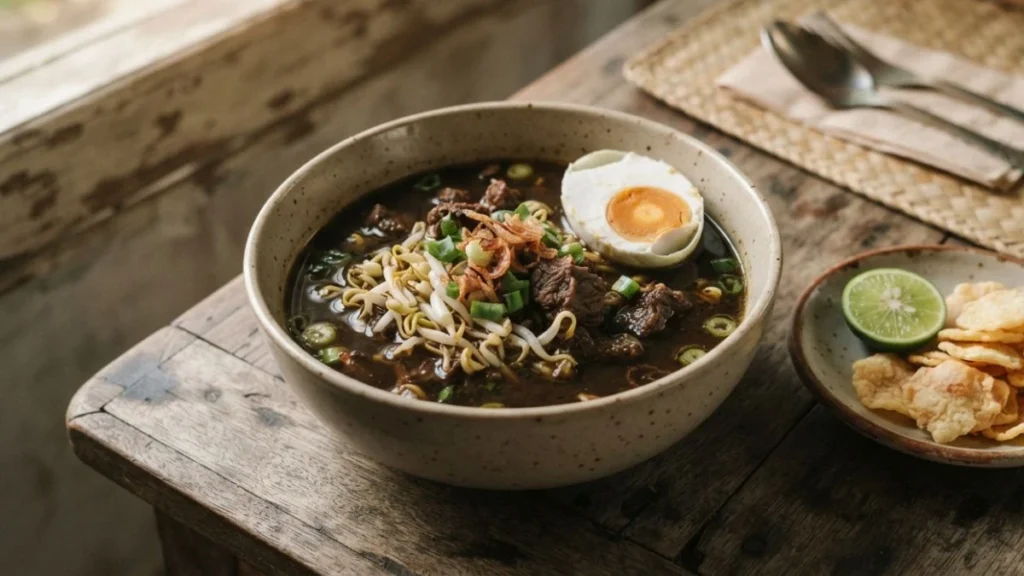
Ask any local to name Surabaya’s single most representative dish, and rawon comes up almost every time. It’s not flashy, and its distinctive near-black color can catch first-timers off guard — but the flavor behind that color is exactly why this soup has earned its place as East Java’s defining comfort food.
What Makes Rawon, Rawon
Beef shank or brisket simmers in a spice paste built from shallots, garlic, coriander, candlenut, turmeric, galangal, lemongrass, and bay leaf, with ground kluwek (also called keluak) pulp stirred in to produce a savory, gently oily broth. Kluwek nuts are what give rawon its signature dark, almost black color and distinctive earthy taste — a genuinely unusual flavor profile among Indonesian soups, often described as rounded and lightly bitter in a way that resembles cacao, finishing clean rather than heavy.
It’s typically served with steamed rice, blanched mung-bean sprouts, a squeeze of lime, salted egg, sambal, and crispy prawn crackers (krupuk) — a combination of textures and temperatures that balances the deep, savory broth.
When and Where Locals Eat It
Rawon functions as both a breakfast and lunchtime mainstay in Surabaya, found everywhere from early-morning markets to late-night warungs, appreciated as much for its restorative quality as for the tender beef itself. For many families, it’s tied specifically to gatherings and festive occasions, functioning less as everyday fast food and more as a genuine comfort dish woven into family life.
Where to Try It
Rawon is widely available across Surabaya, from simple warungs to more established family-run shops, some of which have operated for multiple generations, passing recipes down within the same family — part of what locals mean when they describe Surabaya’s street food scene as a form of living heritage rather than just convenient eating. As with most iconic local dishes, asking a local for their personal favorite spot tends to yield better results than searching generically, since opinions on the “best” rawon are genuinely, passionately divided across the city.
A Note on Kluwek
Kluwek, the ingredient responsible for rawon’s color and flavor, comes from the fruit of the Pangium edule tree and requires careful processing before use — raw kluwek is toxic, and proper fermentation and preparation is essential to make it safe and flavorful. This is one reason rawon is generally better sought out from experienced vendors than attempted as a first home-cooking project; the ingredient handling genuinely matters.
FAQ
Why is rawon black?
The dark color comes from kluwek (keluak) nuts, ground into the soup’s spice base — the same ingredient responsible for rawon’s distinctive earthy, slightly bitter flavor.
Is rawon spicy?
Not inherently — the dish offers gentle chili warmth rather than intense heat, with sambal typically served on the side for anyone wanting to add more spice to taste.
What’s traditionally served alongside rawon?
Steamed rice, bean sprouts, a salted egg, lime, sambal, and crispy prawn crackers (krupuk) are the standard accompaniments, adding textural and flavor contrast to the rich broth.
Is rawon available throughout the day in Surabaya?
Yes — it’s commonly eaten for breakfast and lunch, and available from early-morning markets through late-night warungs, making it one of the more flexible iconic dishes to try regardless of your schedule.