Not every historic building in Surabaya gets the museum treatment. For every House of Sampoerna — restored, maintained, actively celebrated — there are dozens of quietly aging colonial-era structures in the city’s Old Town that are simply losing their fight against time, traffic fumes, and shifting property markets. This is a guide to what’s still standing, and why it’s worth seeing now rather than assuming it always will be.
Why This Is Happening
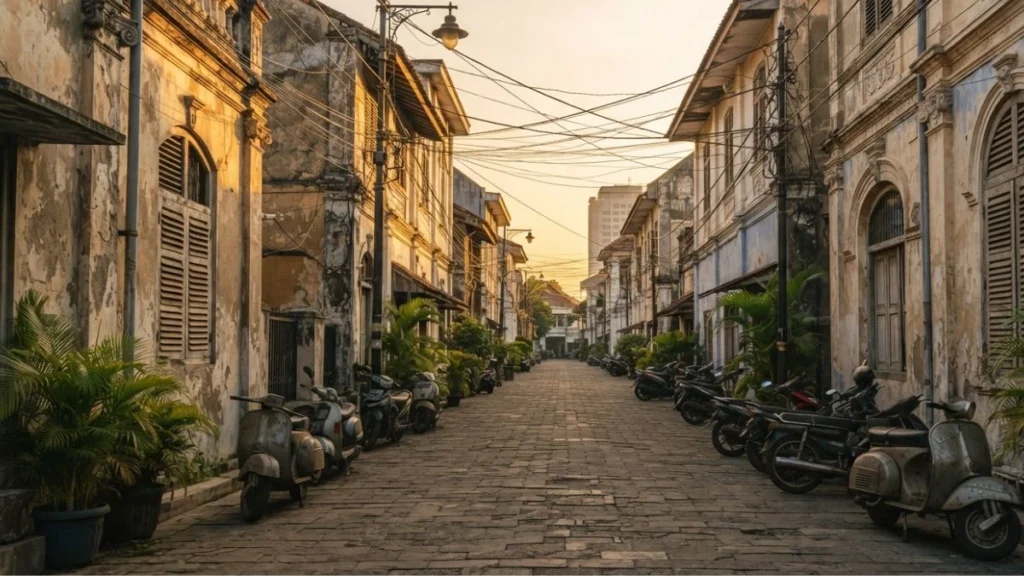
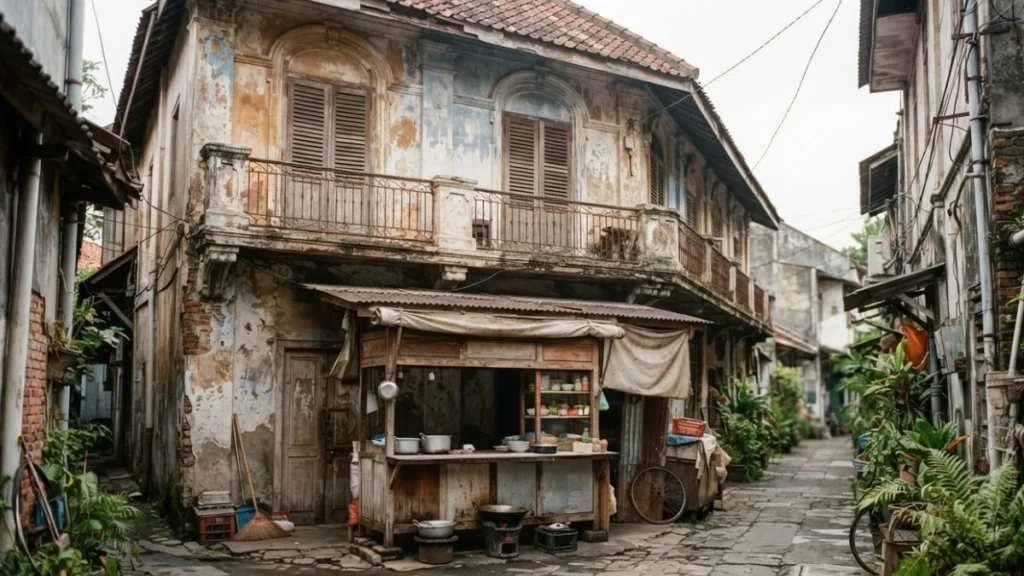
Decades of traffic fumes have left a grey patina on the walls of many of Old Town’s grandest former trading houses, and informal food stalls have sprouted from building facades that once housed wealthy merchant families. Some buildings sit with limp “for sale” banners hanging over their entranceways, slowly giving way to dereliction with each passing wet season — a slow, unglamorous kind of loss that doesn’t make headlines the way a demolition does, but adds up over years to a genuinely different city than the one a previous generation knew.
Unlike officially protected landmarks, many of these buildings sit in a gray zone — privately owned, not formally heritage-listed, and vulnerable to redevelopment, neglect, or simple economic pressure to sell rather than restore.
What’s Worth Seeing Now
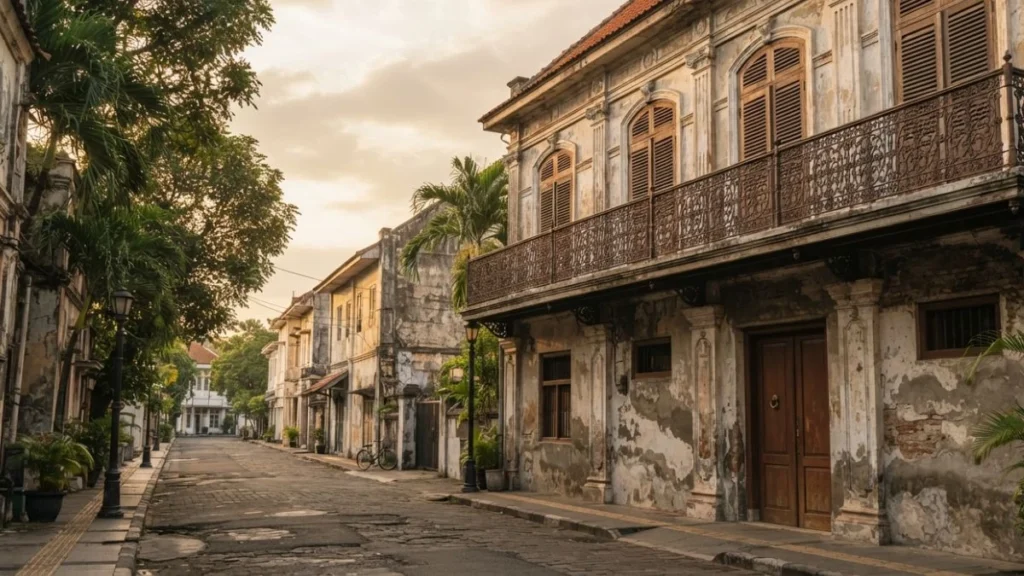
Side-street trading houses in Kota Lama — beyond the well-known main stretches of the Old Town district covered in our walking guide, side alleys still hold two-story colonial-era homes built by wealthy Chinese trading families, many now crumbling but structurally intact enough to explore respectfully from the outside. These aren’t marked on standard tourist maps, which is precisely why they’re worth actively seeking out rather than stumbling into.
Independently owned shophouses near Kembang Jepun — architecture blending Chinese and colonial Dutch influence, some maintained and occupied, others visibly deteriorating, offering a genuine before-and-after contrast within a single block.
Unrestored sections around Jembatan Merah — while the immediate area around the Red Bridge receives more foot traffic and attention, buildings a block or two further out often show the more dramatic signs of neglect, worth a respectful look for anyone interested in the district’s fuller picture.
Preservation Efforts Worth Knowing About
Not everything is being lost — local heritage communities and walking tour operators have taken an active interest in Old Town preservation, both through advocacy and through simply bringing more visitor attention (and by extension, economic incentive) to the district. Joining a heritage-focused walking tour, where available, supports this effort directly while also giving you far more context than exploring alone.
How to Visit Respectfully
Many of these buildings are privately owned, occupied, or in active use as informal shops or homes, even in a deteriorated state — photograph and explore from public streets and alleys, and avoid entering private property without clear permission. Treat this as documentary observation rather than urban exploration in the more invasive sense; the goal is appreciation, not intrusion into someone’s home or livelihood.
FAQ
Why are so many historic buildings in Surabaya’s Old Town deteriorating?
A combination of factors — private ownership without heritage protection, decades of pollution and traffic exposure, and economic pressure that often favors selling or redeveloping property over costly restoration.
Is it legal or appropriate to photograph deteriorating buildings in Old Town?
Generally yes from public streets, but always respect private property boundaries and any occupants, whether residential or informal commercial use — approach as respectful documentation, not exploration of abandoned or unoccupied space.
Are there active efforts to preserve Surabaya’s Old Town?
Yes — local heritage communities and walking tour operators work to bring attention and advocacy to the district, though formal heritage protection remains inconsistent across individual buildings.
What’s the difference between “vanishing” buildings and preserved sites like House of Sampoerna?
Preserved sites have received active restoration and institutional support (often as museums), while “vanishing” buildings are typically privately owned, unprotected structures losing their condition gradually without that same level of investment or attention.