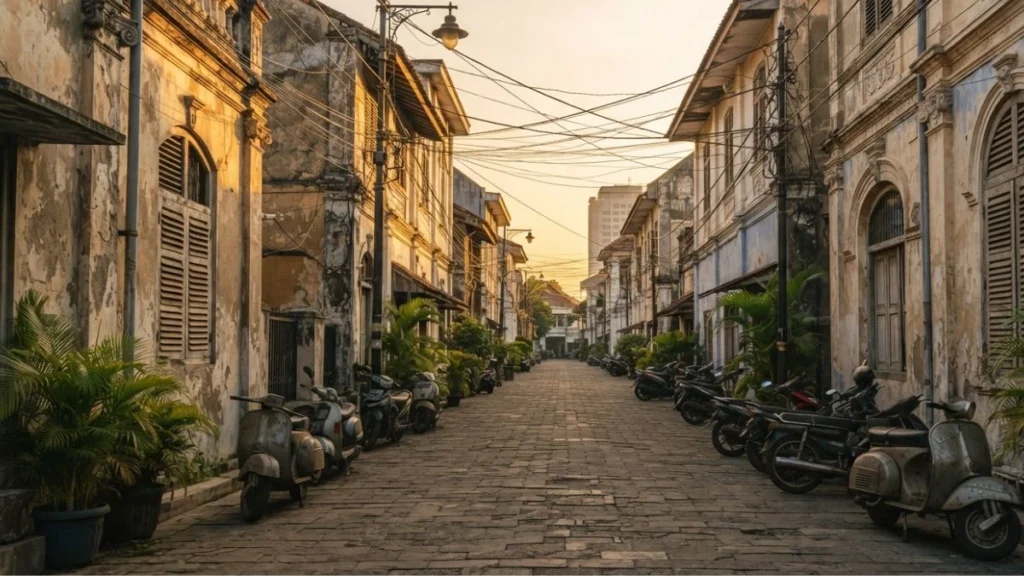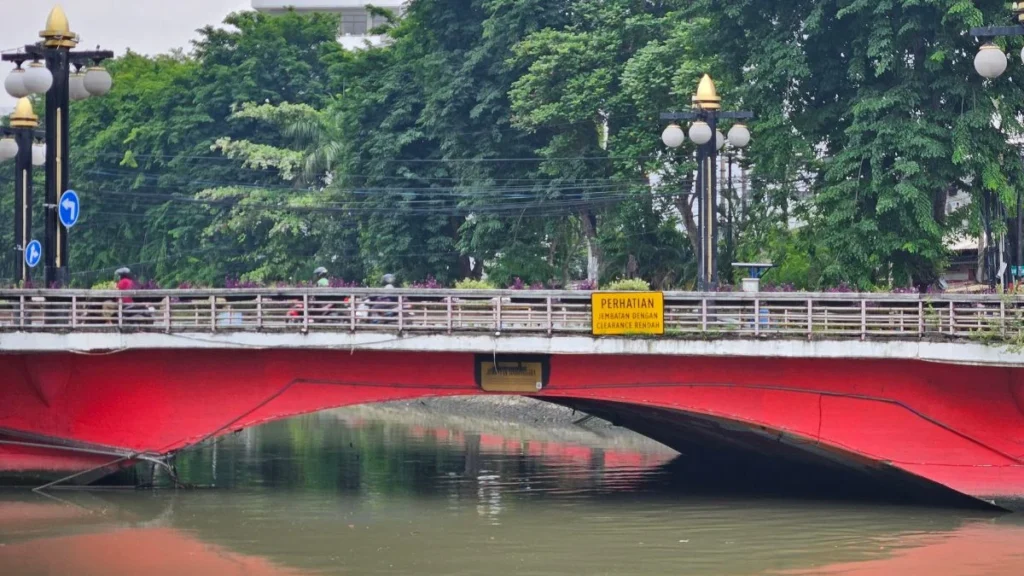
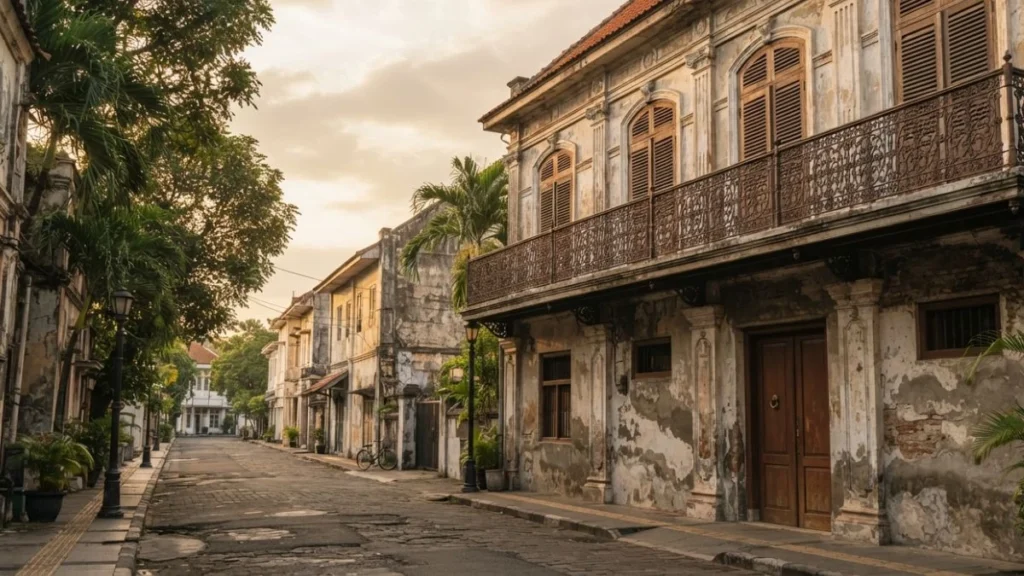
Most visitors to Surabaya never make it here, and that’s exactly what makes it worth the detour. Kota Lama, Surabaya’s Old Town, sits along Jl. Rajawali and around Jembatan Merah — a genuinely intact pocket of Dutch colonial-era architecture from when this district was the bustling trading hub of what was once the most important city in the Dutch East Indies. Walk it slowly, and you’ll find more than the guidebooks list.
What You’re Actually Looking At
The Old Town district is known for its impressive Dutch-era buildings and landmarks, including the grand Gedung Internatio and the riverside Gedung Negara Grahadi, which once served as a governor’s residence. Other notable landmarks in the same cluster include the Cerutu Building and the former De Javasche Bank office, the colonial-era central bank whose Surabaya branch building now partly houses the Bank Indonesia Museum. Together, these buildings represent the commercial and administrative core of what was, for a period, the wealthiest trading port in the entire Dutch East Indies.
What’s Changed Since Then
Much of the Old Town has aged hard — decades of traffic fumes have left a grey patina on the walls of once-grand buildings, and informal food stalls have grown up around building facades that once housed wealthy trading families. Some structures are quietly for sale or slipping toward genuine dereliction, particularly the ones tucked into side alleys away from the main preserved stretch. This isn’t a polished heritage district maintained for tourism the way some other Southeast Asian old towns are — it’s a working, weathered part of the city that happens to still be standing, which is part of its actual character.
How to Walk It
Late afternoon is generally recommended for photography, when the light softens across the facades, and comfortable walking shoes matter more here than almost anywhere else in Surabaya — the area rewards wandering down side streets rather than sticking to a single main road. Joining a local heritage walking tour, where available, adds real depth, since much of the district’s history isn’t signposted and comes alive mainly through someone who knows the stories behind specific buildings.
Key Stops
Jembatan Merah (Red Bridge) — the district’s most recognizable landmark; see our dedicated guide for the full story behind its name and history.
Gedung Internatio — one of the most architecturally significant surviving colonial commercial buildings in the district.
De Javasche Bank building / Bank Indonesia Museum — houses old currency collections and archival photographs of historic Surabaya, a genuine window into what the city looked like a century ago.
Gedung Negara Grahadi — the former governor’s residence, still an active government building today rather than a museum, so exterior viewing is the practical approach for most visitors.
Practical Tips
Visit in the morning or late afternoon to avoid the harshest midday heat while walking between buildings. Traffic through the district can be heavier than the surrounding area’s older infrastructure comfortably handles, so stay alert crossing streets. Pair a Kota Lama visit with nearby Kembang Jepun (Chinatown) for a fuller half-day covering multiple layers of the city’s trading-port history in one trip.
FAQ
Is Surabaya’s Old Town worth visiting compared to the more famous Tugu Pahlawan area?
Yes, as a complementary rather than competing stop — Kota Lama offers a different, less-polished window into Surabaya’s colonial trading history, distinct from Tugu Pahlawan’s focus on the 1945 independence battle.
Is Kota Lama safe to walk around?
Generally yes, though as with any older urban district, staying aware of traffic and uneven pavement matters more than in newer, better-maintained parts of the city.
Are the historic buildings in Kota Lama open to the public?
Some, like the Bank Indonesia Museum, are open as museums; others, like Gedung Negara Grahadi, remain active government buildings viewable only from outside; many others are private property in varying states of use or disrepair.
What’s the best time of day to photograph Kota Lama?
Late afternoon, when softer light brings out the texture and color of the aging colonial facades — a popular window for both photographers and casual visitors.