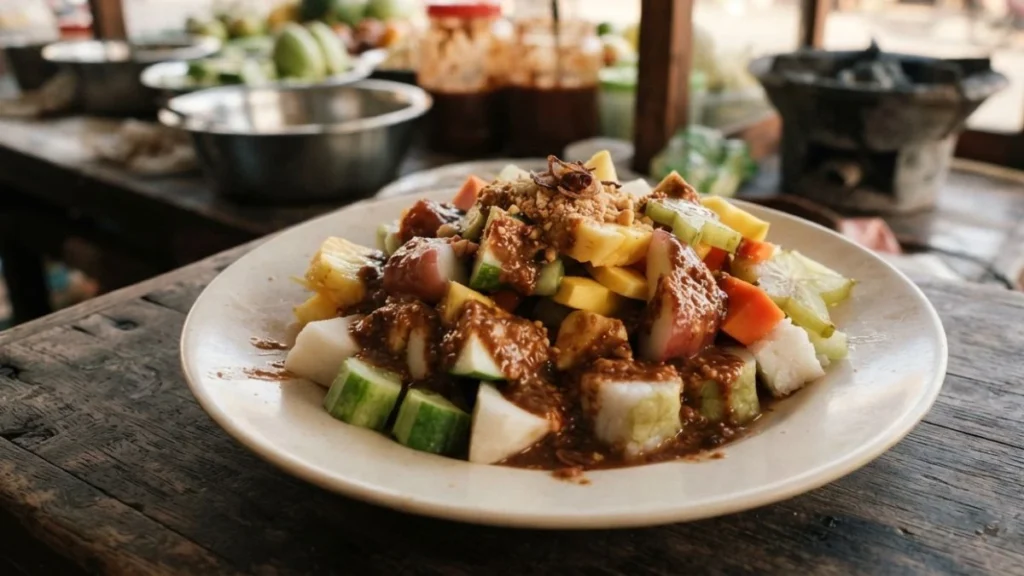
No dish on this list demands more of a first-timer’s trust than rujak cingur — a salad that mixes tropical fruit with boiled cow snout, all bound together by a thick, pungent shrimp-paste sauce. It sounds like an unlikely combination on paper. In practice, it’s one of Surabaya’s most beloved and defining dishes, and understanding why takes a bit of unpacking.
What’s Actually in the Bowl
Rujak cingur layers blanched water spinach (kangkung) and bean sprouts with cucumber, jicama, sliced lontong (compressed rice cake), fried tofu and tempeh, and the dish’s namesake ingredient — cingur, boiled and sliced cow snout with a soft, springy chew. Beyond the vegetables, tropical fruits like cucumber, kedondong (ambarella), pineapple, mango, and jicama are typically included as well, giving the dish its distinctive fruit-salad character alongside the savory, protein-rich elements.
The Sauce Is the Point
Preparing rujak cingur’s sauce is genuinely treated as an art form, with individual vendors guarding their own particular recipe for the petis-based dressing. The sauce is typically made by grinding together petis (fermented shrimp paste), peanuts, chilies, garlic, and other spices into a complex, flavorful concoction that ties together the sweet fruit, savory tofu and tempeh, and the distinctive texture of the cingur itself. This sauce — see our dedicated guide to petis for more on the ingredient itself — is genuinely what separates a mediocre rujak cingur from a memorable one, more than any single ingredient in the bowl.
Understanding the Texture
The cow snout itself is boiled and sliced before being incorporated into the dish, resulting in a texture often described as chewy and gelatinous — unfamiliar to many first-time visitors, but a genuinely central part of the dish’s identity rather than an optional add-on. Approaching it with curiosity rather than hesitation tends to make for a better first experience; it’s a texture worth judging on its own terms rather than through comparison to more familiar proteins.
Why It Matters Culturally
Rujak cingur is widely described as highlighting Surabaya’s bold culinary style — complex, savory flavors that are genuinely unforgettable rather than simply pleasant, and it functions as a kind of edible shorthand for the city’s willingness to embrace intensity over subtlety in its food, a trait that shows up across much of Surabaya’s culinary identity, discussed further in our food culture and influences guide.
Where and How to Try It
Rujak cingur is widely available from street vendors and dedicated family-run shops across the city, with specific vendors often developing loyal local followings for their particular sauce recipe. A typical serving runs around IDR 25,000, an affordable price for the range of flavors and textures involved. If you’re hesitant about the cingur specifically, some vendors will accommodate a version with reduced or omitted cow snout — worth simply asking, since it’s a common enough request that most vendors won’t be thrown by it.
FAQ
What does “cingur” mean in rujak cingur?
Cingur refers to boiled, sliced cow snout, the dish’s distinctive namesake protein, prized for its chewy, springy texture within the broader fruit-and-vegetable salad.
Is rujak cingur spicy?
It carries real depth and complexity from its petis-based sauce, with a savory, slightly pungent character rather than pure chili heat — spice level often varies somewhat by individual vendor.
Can I order rujak cingur without the cingur?
Many vendors will accommodate this request, since it’s common enough among both locals and visitors — worth simply asking if the cow snout specifically isn’t for you.
What is petis, and why does it matter so much in this dish?
Petis is a fermented shrimp paste central to Surabaya’s culinary identity, forming the backbone of rujak cingur’s signature sauce — see our dedicated guide to petis for more detail.