Every iconic dish has an origin story, but few are as literally tied to their name as lontong balap. “Balap” means “race” in Indonesian — and the story behind that name says as much about old Surabaya street commerce as it does about the dish itself.
Where the Name Comes From
The name “Balap” (race) traces back to the speed at which vendors used to prepare and serve the dish in earlier decades — specifically, vendors would race with time and with each other around the area of Wonokromo Market to reach more customers, carrying their wares quickly through the streets to beat competitors to hungry crowds. The dish’s name is essentially a frozen snapshot of a specific style of old-school street commerce, still carried forward today even though the literal “racing” element has faded from how it’s actually sold.
What’s In the Bowl
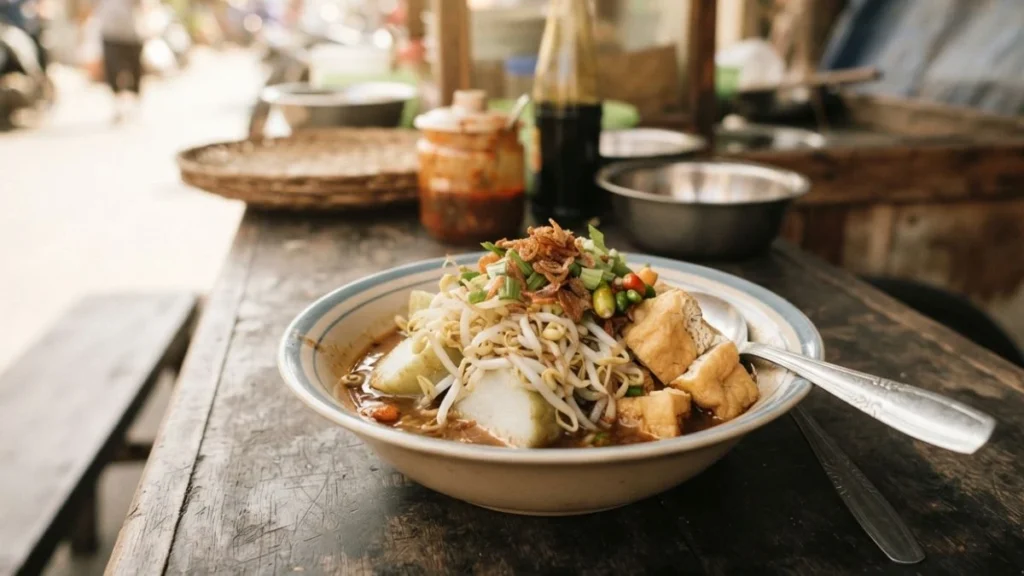
Lontong balap consists of lontong (compressed rice cakes) served with tauge (bean sprouts), fried tofu, fried shallots, and lentho (fried mashed beans), often finished with shredded chicken or fried beef lung and a flavorful peanut sauce built around petis. The dish typically comes together with a light bean sprout soup base, sweet soy sauce, and sambal petis tying the components together.
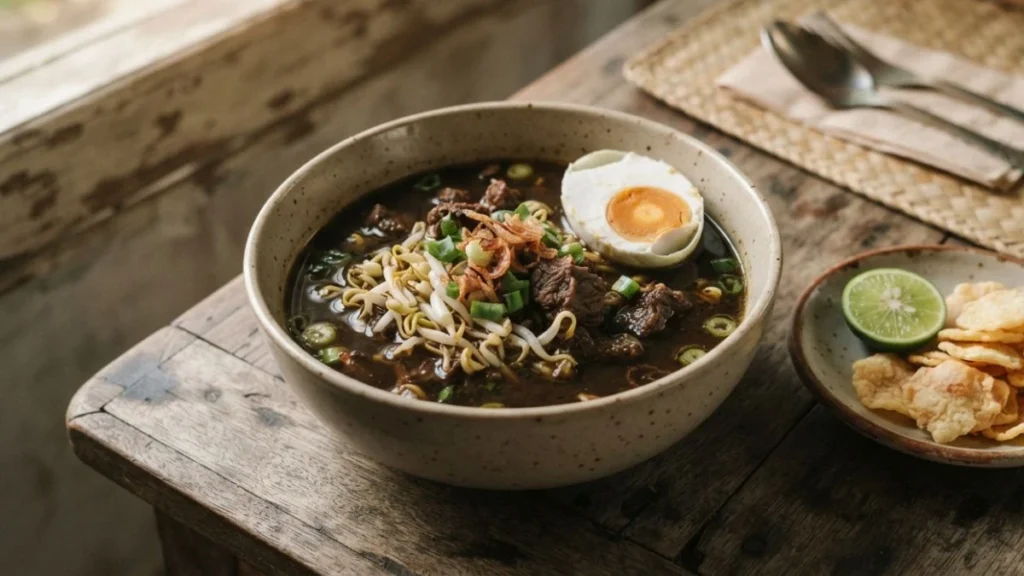
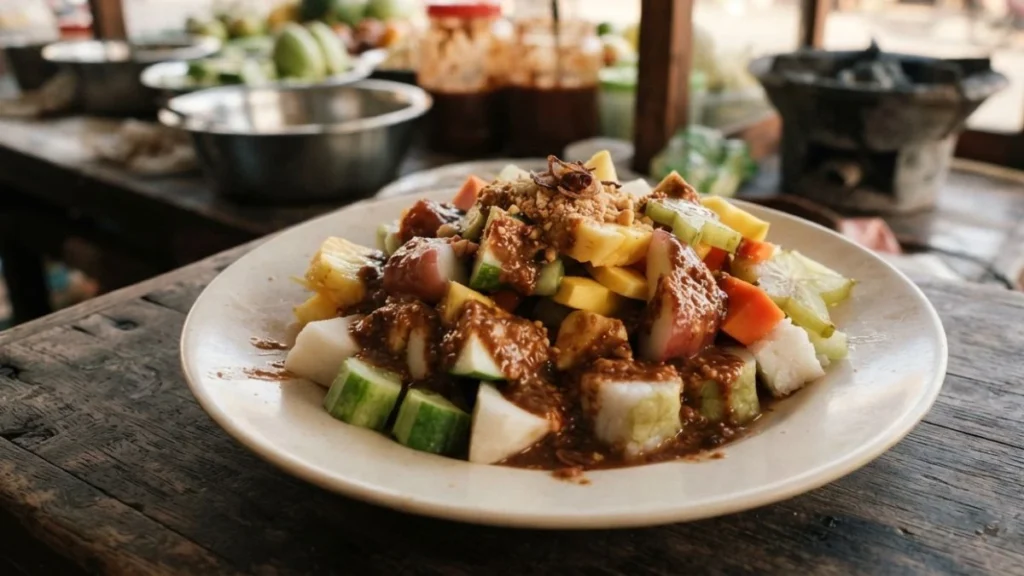
Compared to rawon’s deep, slow-cooked richness or rujak cingur’s bold complexity, lontong balap is lighter and quicker to eat — fitting, given its origin as street food meant to be served and consumed efficiently.
A Fast-Paced Dish for a Fast-Paced City
Lontong balap is traditionally eaten quickly while seated on simple benches, offering a genuine taste of Surabaya’s fast-paced urban rhythm — it’s not a leisurely, sit-and-savor dish the way a family rawon dinner might be, and that quickness is part of its authentic character rather than a shortcoming.
Where to Find It
Several long-established vendors have built strong local reputations for their versions, with some family-run stalls tracing their operation back multiple generations. As with most of Surabaya’s iconic street dishes, asking locals for their preferred vendor tends to yield the most reliable recommendation, since preferences here are genuinely personal and often tied to family habit as much as objective quality.
Pairing It With a Fuller Surabaya Food Crawl
Lontong balap works particularly well as part of a broader street food outing — its lighter profile makes it a good complement to heavier dishes like rawon, rather than a full standalone meal for some visitors. See our best street food areas guide for where to find it alongside other iconic dishes in a single outing.
FAQ
Why is lontong balap called “race food”?
The name references the historical speed with which vendors used to prepare and race to sell the dish around Wonokromo Market, competing with other vendors to reach customers first.
What does lontong balap taste like?
Light and savory, built around the combination of rice cake, bean sprouts, fried tofu, and a petis-based peanut sauce — generally lighter and less rich than dishes like rawon.
Is lontong balap a full meal or a snack?
It functions as both, depending on portion and appetite — many locals treat it as a satisfying light meal, while others pair it with additional dishes as part of a broader food outing.
Where is the best place to find authentic lontong balap in Surabaya?
Several long-established, sometimes multi-generational family vendors have strong local reputations — asking locals for their personal favorite is generally more reliable than searching for a single definitive “best” spot.