
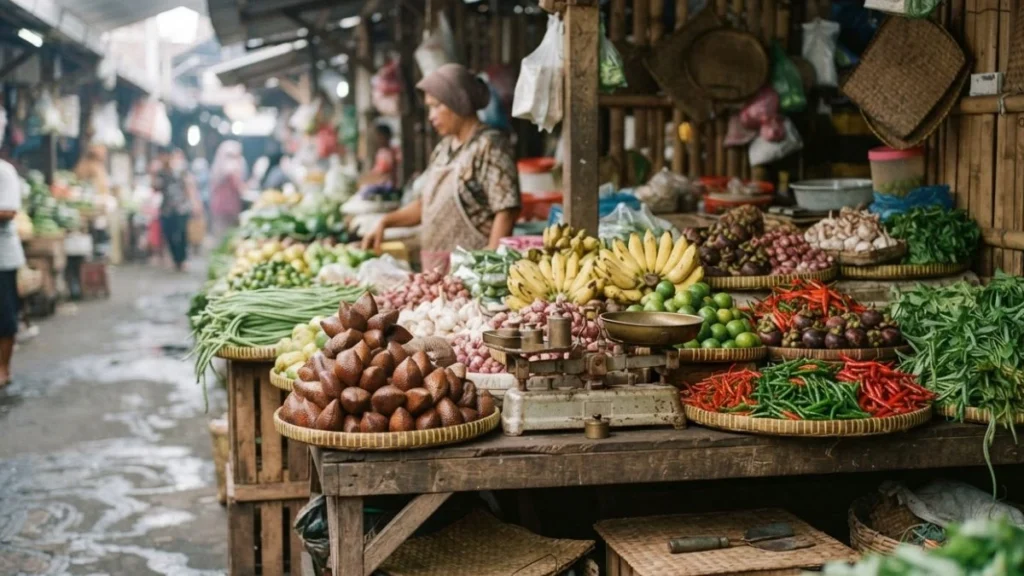
Where you buy groceries in Surabaya makes a bigger difference to your budget than almost any other daily decision — the same week’s shopping can cost two to three times more at an imported-goods supermarket than at a traditional market or local chain. Most residents, foreign and local alike, end up using a mix of all three tiers: traditional markets for fresh produce, local supermarket chains for everyday packaged goods, and imported grocers for the specific items that just aren’t available locally.
Traditional Markets (Pasar Tradisional)
Surabaya’s traditional wet markets are where most fresh produce, meat, and fish are genuinely cheapest, often significantly below supermarket prices for the same items. The tradeoff is that prices aren’t fixed — some light negotiation is normal, especially if you’re a repeat customer — and the experience requires more Indonesian language and cultural comfort than a supermarket checkout. Popular markets like Pasar Wonokromo and Pasar Genteng serve large surrounding neighborhoods and are worth a visit even if you don’t end up shopping there regularly, just to understand the price baseline for fresh goods in the city.
Best for: fresh produce, fish, meat, spices, flowers
Tradeoffs: cash-based, minimal English, no fixed pricing, best visited earlier in the day for freshest selection
Local Supermarket Chains
For packaged goods, basic pantry staples, and a more predictable shopping experience, Indonesian supermarket chains like Indomaret, Alfamart (for quick top-ups), and larger-format stores like Superindo and Hypermart cover the vast majority of everyday needs at reasonable, fixed prices. These accept QRIS and cards, keep consistent hours, and require essentially no Indonesian to navigate — a comfortable middle ground for anyone still adjusting to the city.
Best for: everyday packaged goods, household items, quick convenience shopping
Tradeoffs: limited imported/specialty selection, less fresh-produce variety than a wet market
Imported and Specialty Grocers
For anything from home that isn’t locally produced — specific cheeses, wines, particular snack brands, baking ingredients — stores like Ranch Market, Papaya, and similar specialty grocers stock imported goods aimed specifically at the expat and upper-income local market. This convenience carries a real price premium, often noticeably higher than the equivalent local product or the same imported item back home, since import duties and logistics costs get passed on directly.
Best for: imported specialty items, Western baking and cooking ingredients, familiar home-country brands
Tradeoffs: meaningfully higher prices, fewer locations concentrated mostly in West Surabaya
A Practical Shopping Strategy
Most long-term residents settle into a pattern: fresh produce and everyday protein from a traditional market or a trusted local supplier, pantry basics and household goods from Indomaret/Alfamart or a larger local supermarket, and imported grocers reserved for the specific items you genuinely can’t substitute locally. This approach keeps your monthly food budget reasonable without requiring you to give up everything familiar from home.
Delivery and Online Grocery Options
Grocery delivery apps have grown significantly in Indonesia, and services integrated with ride-hailing platforms (like GoMart via Gojek) or dedicated grocery delivery apps let you order from supermarkets without leaving home — useful for bulkier shopping trips or when you simply don’t have time. Prices are generally comparable to in-store, sometimes with a modest delivery fee, and payment runs through the same QRIS/e-wallet ecosystem covered in our payments guide.
FAQ
Is it safe to eat fresh produce from traditional markets in Surabaya?
Yes, with the same common-sense practices you’d use anywhere — wash produce thoroughly before eating, and buy from vendors with consistent turnover and clean stalls, which is easy to gauge after a visit or two.
How much more expensive is an imported grocery store compared to a local supermarket?
Meaningfully more — often double or more for equivalent imported items, since duties and logistics costs are baked into the price. Reserve imported grocers for items you genuinely can’t find locally rather than everyday shopping.
Do I need to speak Indonesian to shop at a traditional market?
Basic numbers and a few key phrases help a lot, but it’s entirely possible to shop successfully with pointing, gestures, and a calculator or phone for pricing — many vendors in busier markets are used to non-Indonesian speakers.
Which is more common among expats — supermarket or traditional market shopping?
Most long-term foreign residents end up using both, splitting fresh goods and everyday staples between traditional markets/local supermarkets and reserving imported grocers for specific specialty items.