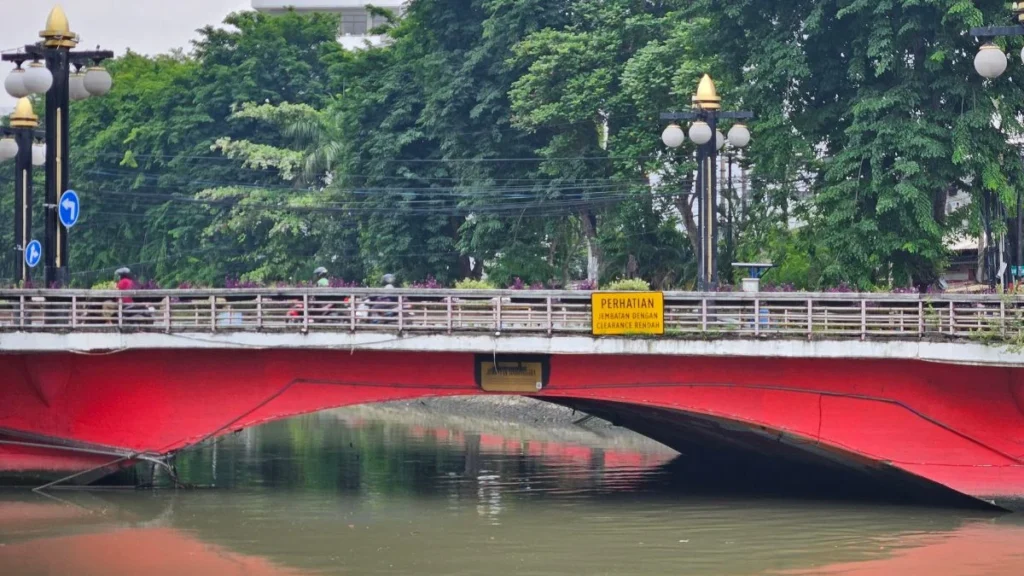
A bridge doesn’t usually need two competing origin stories to explain its name — but Jembatan Merah, Surabaya’s “Red Bridge,” does, and both versions say something real about how the city holds its history.
Two Stories, One Name
One explanation holds that the bridge was originally painted red by Dutch colonizers who built it in the 18th century as part of their fortification and transportation infrastructure — a straightforward, literal account rooted in colonial-era engineering and paint choice. The second, more emotionally loaded version holds that the bridge earned its name from being stained red with the blood of Indonesian freedom fighters during the Battle of Surabaya in 1945, one of the most intense and significant confrontations of the Indonesian National Revolution.
Most historians point to the paint explanation as the more literal, documented origin — the bridge’s red color predates 1945 by well over a century. But the blood-stained version persists in local memory precisely because it captures something true about what happened near the bridge during the war, even if it’s not the literal etymology. Both stories get told, often together, because together they capture the bridge’s full character: colonial infrastructure that later became a genuine site of resistance and sacrifice.
Why This Location Mattered
Jembatan Merah sits at the heart of what was once Surabaya’s most important commercial district under Dutch rule — the historic quarter of what was, for a period, the most important city in the Dutch East Indies. Its location, connecting different parts of the old trading district, made it strategically and symbolically significant well before 1945, and that pre-existing significance is part of why the area became contested ground during the independence struggle.
The Bridge Today
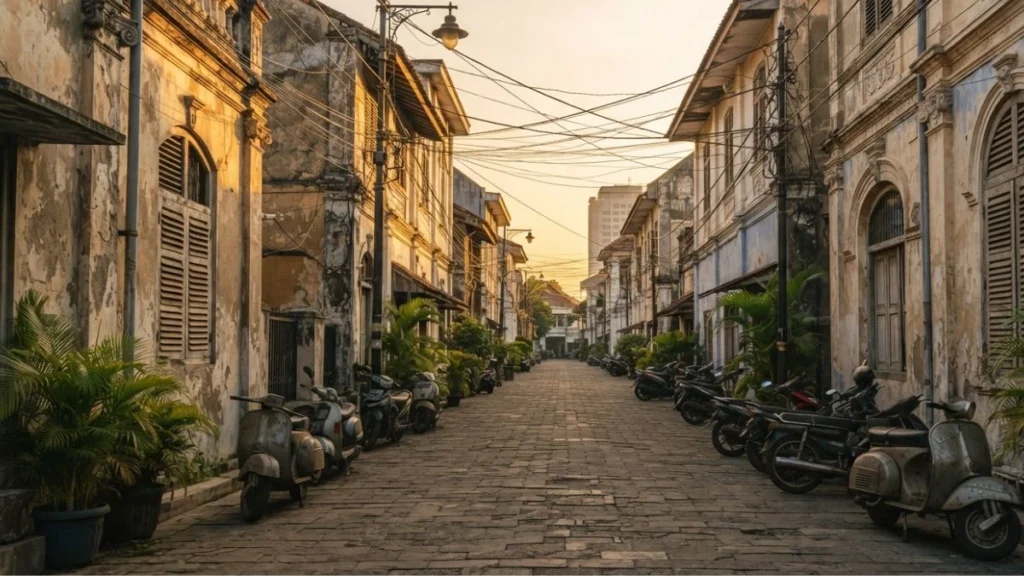
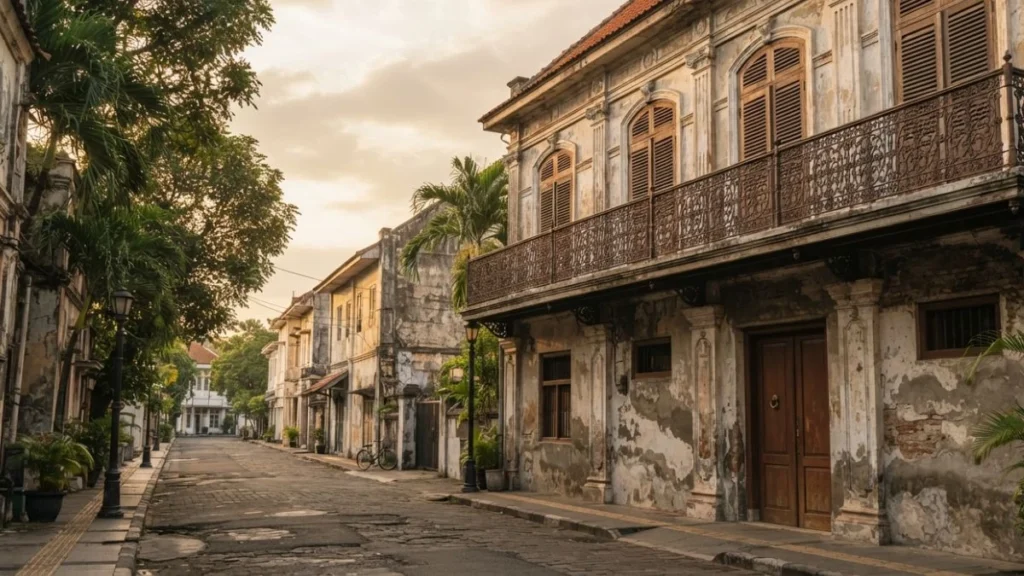
Jembatan Merah remains a functioning bridge and a genuine landmark within Surabaya’s Old Town (Kota Lama) district, its red-painted railings a consistent visual anchor for the surrounding historic buildings. It’s not a monument set apart for tourism — it’s still simply part of the city’s working infrastructure, which is part of what makes visiting it feel more grounded than staged.
For Surabayans, the bridge carries a specific kind of quiet meaning: an ordinary-looking old bridge to outside visitors, but something with real personal and historical resonance to a native of the city — a small but telling reminder that Surabaya’s most significant sites aren’t always dramatic monuments; sometimes they’re a bridge people cross every day without necessarily talking about what it represents.
Visiting Jembatan Merah
The bridge is best experienced as part of a broader walk through the surrounding Old Town district, rather than as a standalone stop — pair it with nearby colonial buildings like Gedung Internatio and the Bank Indonesia Museum, covered in our full Old Town walking guide. Late afternoon light tends to bring out the red railings and surrounding architecture particularly well for photography.
FAQ
Why is Jembatan Merah called the “Red Bridge”?
There are two commonly told explanations: that Dutch colonizers originally painted it red as part of 18th-century fortification infrastructure, or that it earned the name from bloodshed during the 1945 Battle of Surabaya. The paint explanation is generally considered the more literal historical origin.
Is Jembatan Merah related to the Battle of Surabaya?
The surrounding area saw significant fighting during the 1945 Battle of Surabaya, which is part of why the “blood-stained bridge” version of the name’s origin persists in local memory, even though the bridge’s red color predates the battle.
Can I still walk across Jembatan Merah today?
Yes — it remains a functioning bridge and an active part of the city’s infrastructure, not a preserved monument set apart from daily use.
What else is worth seeing near Jembatan Merah?
The surrounding Kota Lama (Old Town) district, including Gedung Internatio and the Bank Indonesia Museum, makes for a natural extended visit — see our full Old Town walking guide.